
How Three Burial Rituals Maintained African Civilization for Thousands of Years
Why we need to reclaim the Ancestral Intelligence embedded in our traditions

I recently had Dr. Kimani Nehusi from Temple University as my guest on The Browder File Show.
We explored something that’s been missing from how we talk about African identity:
The Ancestral Intelligence that is embedded within our traditions and rituals.
In today’s newsletter, I’m breaking down why understanding the African Ancestral Land Complex might be the most important reconnection work you do this year.
A few weeks ago I received a text from someone yesterday with an Instagram clip.
The clip was part of an interview with Alice Walker. And I feel compelled to share it with you because it fits within our theme. Me seeing this clip is what some people may refer to as a coincidence, but those who know me know that I don’t believe in coincidences.

This is what Alice Walker says in this clip:
“We’re walking on ground that’s actually full of ancestors.
We never pay attention to this fact. At least most people don’t.
It is as if all of this indigenous knowledge,
All of the indigenous wisdom,
All of the indigenous everything is something that we’ve simply discredited like it never existed.
This is a deep impoverishment of us as modern people.
That’s why we walk around looking like zombies.
I know what it feels like to be supported by Ancestors.
I lean on them all the time.
These are the people who got me as far in life as I am.”
She’s right. And my conversation with Brother Nehusi brought that truth into sharp focus.
Dr. Nehusi revealed how our ancestors created a complete system—the African ancestral land complex—that kept communities thriving longer than any civilization in human history.
The system had 3 components:
the ritual burial of the umbilical cord,
the ritual burial of the placenta, and
the ritual burial of our bodies in the earth.
These rituals formed an integrated whole that transformed ordinary ground into ancestral land, and in doing so, created unbreakable bonds between those who were here, those who are here now, and those yet to come.
Why Your Umbilical Cord Matters More Than You Think
In the Coffin Texts, the ancient Kemites refer to the umbilical cord as “magically potent.”
In the Caribbean today, even people who’ve forgotten they’re African still say “my naval string is buried there”, when talking about their deepest connection to a place.
That phrase carries millennia of meaning.
When our ancestors ritually buried the umbilical cord, they were spiritually and physically declaring that this child belongs to this land, and this land belongs to this child, forever.
In ancient Kemet, they cut the umbilical cord with an obsidian knife. Even when they had more advanced tools, they chose not to use them. For the ancient Kemites, childbirth was regarded as a ritual occasion, not a medical occasion.
The ritual created an irreversible tie between person and place.
Even today, people will fight for land their grandparents are buried on with an intensity that makes no economic sense.
That is the power of Ancestral Intelligence operating in the bloodline.
What Happens When Every Birth Sanctifies the Same Ground
The placenta burial might seem like the least important of the three rituals, but the placenta is the first connection between mother and child.
It is the organ that sustains life before we take our first breath. And when you bury it in the same ground where your umbilical cord and your ancestors rest, it completes the circuit between child, mother, and Earth itself.
In ancient Kemet, one of the oldest artifacts (from the time they formed as a unified nation), the Narmer Palette, shows a leader walking behind a “royal placenta” on a standard.
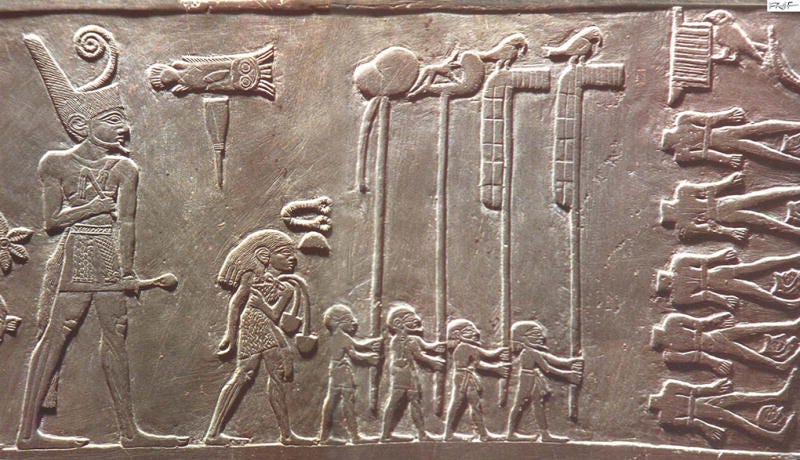
Dr. Nehusi explained that after thousands of years of this practice, the land itself became a source of identity that couldn’t be erased no matter what happened to the people living on it.
The ancient Egyptians oriented their entire civilization around honouring their ancestors.
In their language, south was “up.” North was “down.” Because south was where their ancestors came from, where the source of the Nile was, and where the sacred land lay.
They had multiple names for inner Africa, each one revealing how they understood their origins:
Ta-Kenset: Land of the Placenta
Ta-Khenti: Land of Beginnings
Ta-Iakhu: Land of Ancestral Spirits
Ta-Neter: God’s Land, the Holy Land
Our ancestors knew where they came from, and they named the place after the ritual that made the land sacred.
When Pharaoh Pepi I heard that a man from the Baka people was coming to visit, he got excited because he expected this man to know “the dances of the gods from the Land of the Ancestors.”
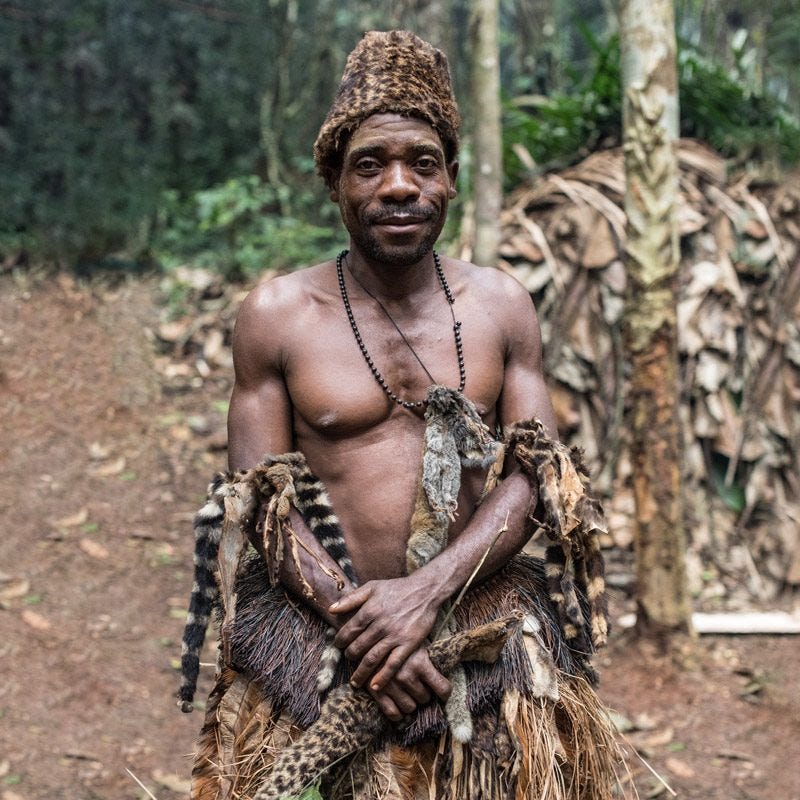
To Pepi, these dances were authentic because they came from where his people originated and where the source of his culture.
How Burial Creates Immortality
When you bury your dead in the ground, you create ancestors.
In ancient Kemet, ordinary people introduced themselves by saying “I come from”—and they’d name a specific piece of ground. Not a city or a nation but a specific piece of earth that held their people’s bones.
That ground held their identity.
The Tale of Sinuhe
The Tale of Sinuhe is one of the oldest stories we have from ancient Kemet and it drives this point home.
Sinuhe spends decades living abroad in luxury. But he’s tormented by one thought, and he keeps returning to it:
“For what is more important than the union of my body with the land of my birth?”
When the Pharaoh finally invites him home, the decree says:
“You shall not die abroad! Asians will not bury you! Enough of this wandering over the earth. Return!”
And when Sinuhe gets back to Egypt, the first thing he does is kiss the ground.
Sinuhe knew the importance of being buried on ancestral land.
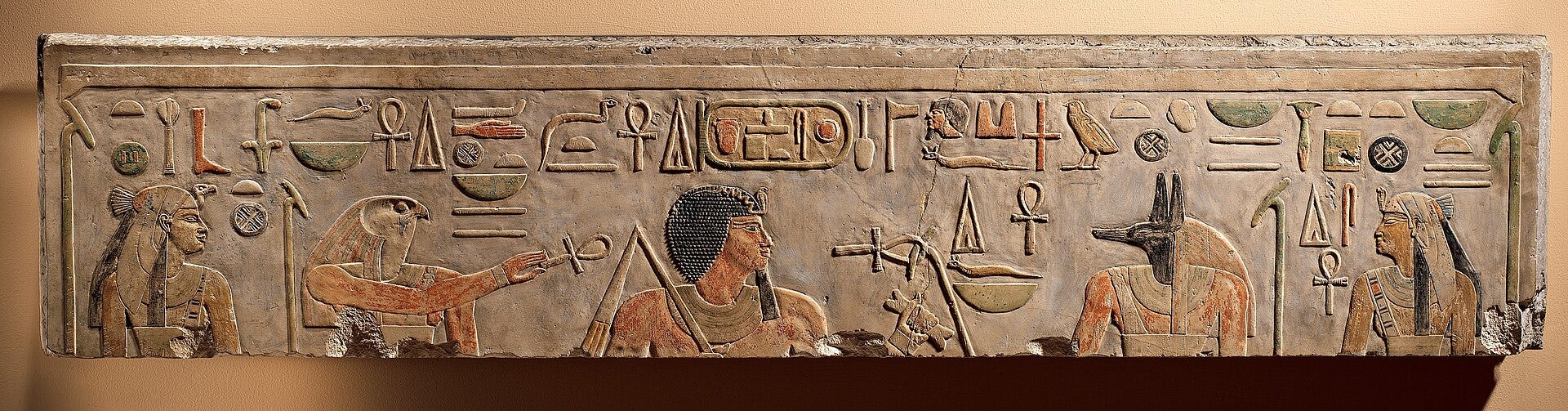
When you speak the name of someone buried in ancestral land, you give them power.
You make their spirit available to the living. The ancient Kemites knew this.
They had a saying: “Speak the name of the dead and they live again.”
That’s why Europeans named their cities after their ancestors. The capital of America is named after George Washington and Christopher Columbus.
They understood what we forgot: names spoken over ancestral ground maintain the presence of those who came before.
They built entire nations on this principle, while they tried to erased it from our memory.
People Without Land Are People Without Power
Something else hit me during my conversation with Dr. Nehusi.
In ancient Kemet, around 2160 BCE, there’s this description of Asiatic people.
They said:
“The miserable Asiatic, he is wretched because of the place he’s in: short of water, bare of wood, its paths are many and painful because of mountains, he does not dwell in one place, food propels his legs, he fights since time immemorial.”
That phrase—”he does not dwell in one place”—that’s the key.
The description diagnoses a spiritual condition.
In Medu Netcher (the Kemetic language), they had words for this:
Rwi meant “wanderer”
Rwty meant “outsider, stranger”
Shmaw meant “wanderers, strangers”
All of these are negative terms. Because to be unrooted from land was to be spiritually deficient.
In Guyana, they have a word that carries the exact same concept: Nowarian.
It means someone who comes from Nowhere.
Someone with no roots, no land and no connection to ancestors. Someone who can’t answer the question “where are you from?” with a piece of ground that holds their people.
Dr. Nehusi explained that the African Ancestral Land Complex was a “risk management strategy to minimize individualism and corruption.”
Our ancestors knew that disconnecting people from land and memory makes them vulnerable to every form of exploitation.
Connected people—people who know heir roots—can’t be easily controlled.
That’s the real reason these rituals were outlawed during enslavement.
Our cultural rituals maintained our African identity and power when everything else was designed to erase it.
The core idea driving all three rituals is that humans are not separate from the Earth. We come from it, we’re sustained by it, and when we return to it, we remain available to those who come after us.
Restoring these practices is imperative to our survival.
You are not an individual floating through time. You’re the current incarnation of your ancestors.
You carry the genes, the memory, and the responsibility of all who came before.
And you are the ancestor of all who come after.
Thank you for reading
Anthony Browder
Founder of IKG
P.S If you want to visit the sacred land of your ancestors, join me for My Final Tours to Kemet
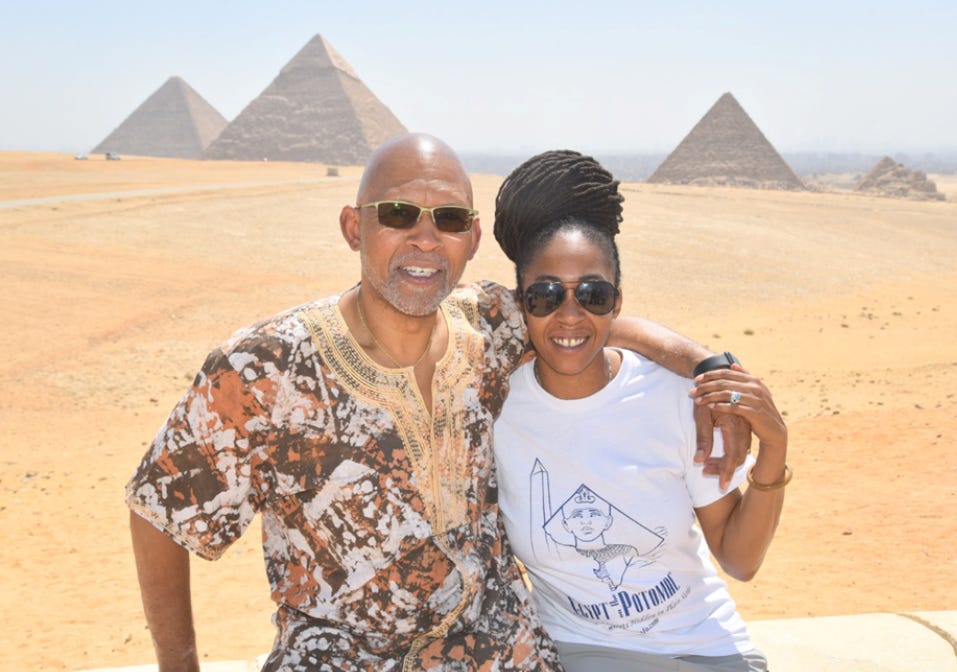
July 7th and December 14th, 2026 mark my last Egypt study tours after 39 years.
This is your final opportunity to walk where your ancestors walked, see what they built, and understand why they preserved this knowledge for you.
If you want more information on the tours, I have put together a video which explains everything:
Thank you, Brother Browder. Great article.
My wife and I are seriously considering going on your 2026 educational tour to Kemet.
When she and I decided to write a historical novel inspired by the life of my once-enslaved great grandmother, we were determined to uplift African culture.
One element we included was the importance and the burying of the umbilical cord.
https://aalbc.com/books/9798650138310 - CLANDESTINE; The Times and Secret Life of Mariah Otey Reddick - A Saga of Resistance and Resilience.
My maternal great-grandmother Mariah was given as a wedding gift at 10 years old and grew up to become a spy for the Union.
I shared the link with the ASCAC Western Region Study Group, along with the video of you in the tomb where mummified body parts were discovered, as well as one of the many videos where you discuss AI. Everyone was very interested in learning more. Thank you for sharing our genius--the importance of the "genes in us."